
What Is a Telecom Shelter?
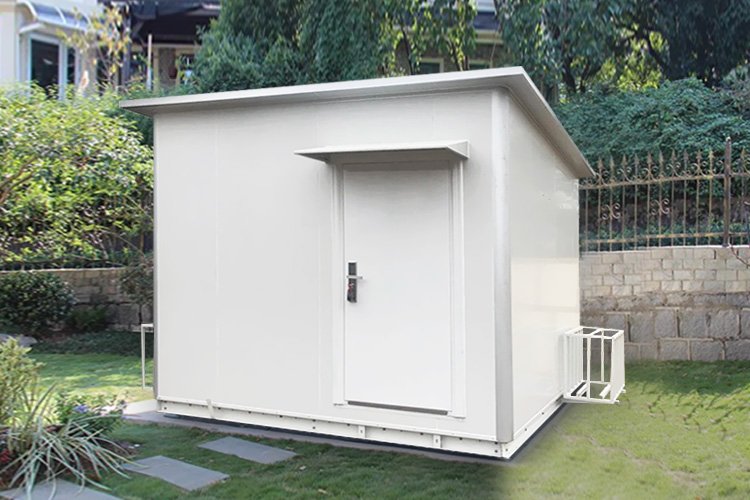
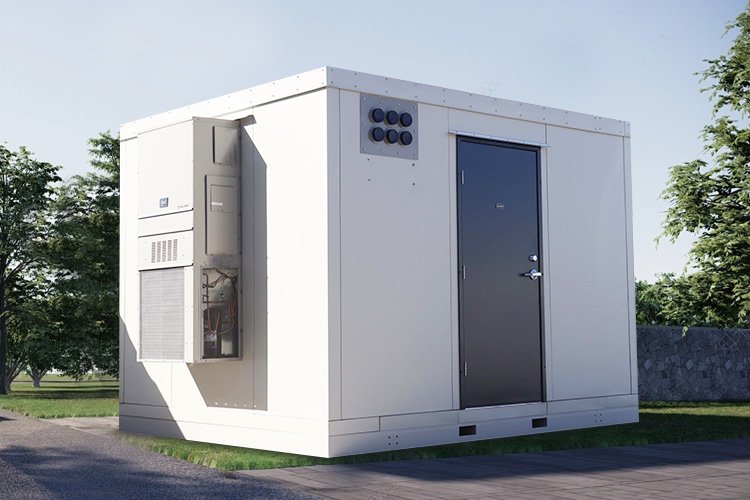
Telecom shelter is a prefabricated modular enclosure designed to protect telecommunications, wireless, fiber-optic, and network equipment in outdoor or remote locations.
It offers greater equipment capacity than a standard equipment cabinet, while being easier to prefabricate, transport, and rapidly deploy than a conventional equipment room.
Telecom Shelter Applications
- 5G Telecom Infrastructure
- Wireless Communication Networks
- Fiber Optic Networks
- Cellular Base Stations
- Data & Network Equipment
- Remote Communication Sites
- Rural & Off-Grid Telecom Infrastructure
- Emergency Communication Systems
Telecom Shelter Structure
· Gelcoat Layer FRP + Foam Core + FRP
Our composite telecom shelter panels feature a Gelcoat FRP + Foam Core + FRP sandwich structure, providing a lightweight and durable solution for telecom infrastructure.
- Excellent UV resistance – The gelcoat surface helps protect the shelter from long-term UV exposure and outdoor weathering.
- Integrated FRP reinforcement – Embedded FRP structural members enhance the overall strength and rigidity of the shelter.
- Lightweight construction – Approximately 70% lighter than steel and 25% lighter than aluminum, helping reduce transportation, installation, and structural support costs.
- High strength-to-weight ratio – The composite structure provides excellent mechanical performance while significantly reducing overall shelter weight.
- Corrosion resistant – FRP does not rust and performs well in humid, coastal, and other demanding outdoor environments.
· Traditional Aluminum / Steel
We also provide traditional aluminum and steel telecom shelter solutions for customers who require conventional structural materials. Aluminum shelters offer good strength and corrosion resistance with a relatively low weight, while steel structures provide high structural strength and durability.
Depending on the project requirements, we can provide FRP composite, aluminum, or steel shelter structures, with customized dimensions, insulation, reinforcement, openings, and internal layouts to meet different telecom and equipment housing applications.
Telecom Shelter Materials
| Material | Main Advantage | Typical Application |
| FRP | Corrosion & weather resistance | Outdoor shelters |
| CFRT | Lightweight & impact resistant | Mobile telecom infrastructure |
| Aluminum | Lightweight & corrosion resistant | Equipment structures |
| Steel | High structural strength | Heavy-duty shelters |
| PET Foam | Lightweight & thermal insulation | Sandwich panels |
| XPS foam | Thermal insulation & moisture resistance | Shelter walls/roof |
Key Performance Requirements
Thermal Insulation
Telecom shelter requires excellent thermal insulation properties to regulate the internal operating temperature and ensure the stable operation of the equipment.
The use of insulation core materials such as PET, XPS, and PU can significantly reduce heat transfer. Additionally, thermal bridging in the walls, roof, and joints should be minimized to enhance overall thermal insulation performance.
Weather Resistance
Telecom shelters are often exposed to outdoor environments for extended periods. Therefore, their enclosures must offer excellent weather resistance, waterproofing, moisture resistance, and corrosion resistance to ensure the stable operation of communication equipment across diverse climatic conditions.
Effective sealing designs are essential for areas such as doors, joints, and cable entry points. Particular attention must be paid to external corrosion, especially in coastal, high-humidity, or industrial environments.
Fire Performance
Due to their specific nature, telecom shelters require special attention regarding fire resistance and fire prevention to avoid damage to communication equipment.
Their walls, roofs, and exterior materials must meet specific fire-resistance ratings and comply with local regulations. Furthermore, these materials should minimize the generation of smoke and harmful gases during combustion, thereby providing a safer working environment for equipment maintenance personnel.
Impact Resistance
In addition, they require good impact resistance to withstand various impacts during transport, installation, and daily operation. Given their long-term exposure to outdoor environments, the housing must maintain stable mechanical properties.
This necessitates sufficient mechanical strength for structural support. A sandwich structure—comprising FRP sheets and a high-density foam core—can provide excellent impact resistance.
Waterproofing
Telecom shelters are exposed to diverse climatic conditions—such as rain, snow, and humidity—over extended periods, necessitating excellent waterproofing capabilities. Ensuring an absolute seal on the enclosure is essential to prevent moisture ingress that could compromise communication equipment, electrical systems, and thermal insulation structures.
Service Life
For the new type of telecom shelter, the overall service life can be extended through the use of weather-resistant FRP facing layers, stable thermal insulation cores, corrosion-resistant structural components, and weather-resistant sealing systems.
Custom Telecom Shelters
- Size
- Custom length / width / height
- Panel Thickness
- Material Selection
- Door & Access
- Windows / Louvers
- Cable Entry
- Equipment Mounting
- HVAC Integration
- Electrical Systems
- Monitoring Systems
- Color & Surface Finish
- Embedded Components
FAQ
What is a telecom shelter?
Products |
Application Industries |
Contact Us
info@equipmenthousing.com