
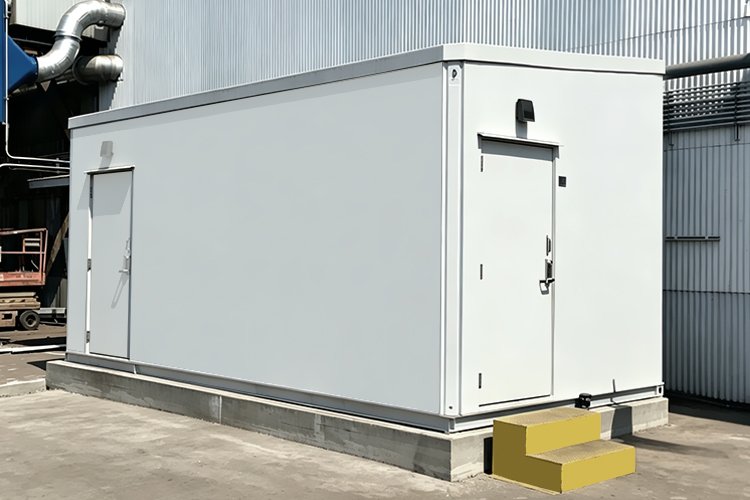
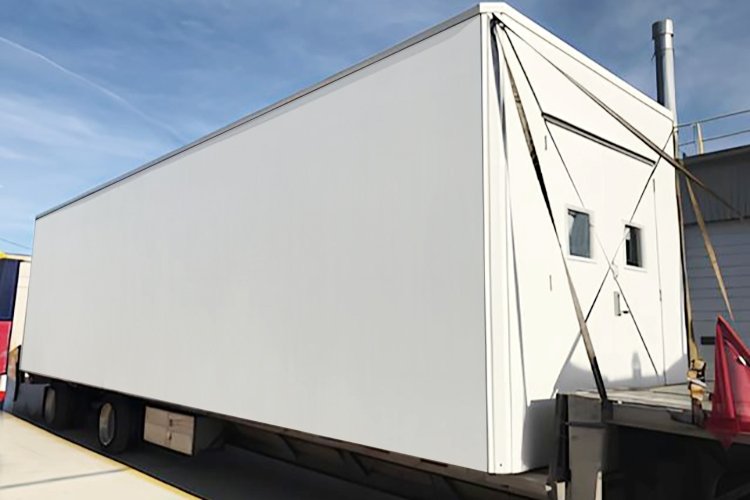
The energy shelter is a protective housing specifically designed for energy systems, serving to safeguard battery energy storage systems, power conversion equipment, and other critical energy infrastructure.
Energy Shelter Applications
- Battery Energy Storage Systems
Energy shelters provide a controlled, enclosed protective environment for Battery Energy Storage Systems (BESS). They help safeguard sensitive energy equipment against outdoor environmental factors such as high temperatures, humidity, rain, UV radiation, dust, and corrosion.
By integrating thermal insulation, structural reinforcement, ventilation, HVAC systems, and customized equipment layouts, they create a stable operating environment for energy storage systems.
- Renewable Energy Storage
Renewable energy storage primarily refers to the process of storing electricity generated from renewable sources—such as solar and wind power—and releasing it for use when needed. It encompasses technologies and applications such as solar energy storage, wind energy storage, and grid and microgrid integration.
Energy shelter provides structural and environmental protection, thermal insulation, and a space for customized equipment integration.
- Power Conversion Systems
The Power Conversion System (PCS) is a critical component of energy storage systems, responsible for managing the conversion and flow of electrical energy between batteries, renewable energy sources, and the grid. Typically, it converts the direct current (DC) output from batteries into alternating current (AC) for use by the grid or loads, while converting AC into DC during the battery charging process.
Within the energy shelter, PCS units can be integrated with control, monitoring, and auxiliary systems, providing a protected, comprehensive solution for energy storage and power management.
- Industrial Energy Systems
Industrial energy systems refer to systems for energy generation, storage, conversion, and management applied in industrial facilities and large-scale commercial settings. These systems typically include battery energy storage systems, power conversion systems, renewable energy integration facilities, backup power supplies, and energy management equipment.
- Commercial & Distributed Energy Storage
Construction & Materials
Composite Panel Construction
FRP+泡沫芯
(配图介绍)
Structural Reinforcement
Interior Protection
Key Features & Performance
Thermal Insulation
Insulation foams such as XPS or PU are used as the core filling material for the panels, ensuring effective thermal insulation for the interior of the energy shelter.
Fire-Resistant
Depending on project requirements, the protective enclosure can be configured with fire-resistant panels, thermal insulation materials, fire doors, and fire-compartmentation structures to effectively slow the spread of heat and fire.
Weather Resistance
We have added a layer of UV-resistant material to the outer FRP surface, ensuring the energy shelter system is waterproof and moisture-proof; it withstands humidity, rain, snow, and intense sun exposure, offering excellent weather resistance.
Corrosion Resistance
The materials we use—such as FRP (fiberglass-reinforced plastic), aluminum, galvanized steel, and coated metal sheets—help mitigate the effects of moisture, rain, humidity, and other environmental factors.
Structural Strength
The roof, side panels, and floor are all constructed from single-piece, high-strength FRP skin foam composite panels. In addition to their inherent strength, we have reinforced the structure using components such as FRP support ribs and square steel tubing.
Custom Energy Shelter Solutions
- Custom Materials
- Custom Dimensions
- Custom Openings
- Integrated kits
- Surface & Color
Energy Shelters vs Traditional Equipment Enclosures
| Factor | Energy Shelter | Traditional Building |
| Installation | Prefabricated | On-site construction |
| Weight | Lower with composites | Usually heavier |
| Construction Time | Shorter | Longer |
| Customization | High | Medium |
| Thermal Insulation | Integrated | Requires separate construction |
| Corrosion Resistance | Material-dependent | Material-dependent |
| Relocation | Possible | Difficult |
| Manufacturing Control | Factory controlled | Site dependent |
Why Choose Us?
FAQ
What is an energy shelter used for?
Energy protection enclosures are designed to house and protect critical energy equipment and are widely used in applications such as battery energy storage systems (BESS), renewable energy storage, industrial energy systems, and grid infrastructure.
What is the difference between an energy shelter and a BESS container?
BESS containers typically refer to standardized or container-based protective enclosures designed specifically for Battery Energy Storage Systems (BESS), whereas an “energy module” (or energy cabin) is a broader and more customizable type of protective enclosure.
What materials are used to manufacture energy shelters?
Common materials for interior and exterior surfaces include FRP, CFRT, aluminum, galvanized steel, and other coated steel sheets. Depending on performance requirements and application scenarios, insulation core materials such as PET foam, PU, XPS, or PVC foam may be selected.
How is thermal insulation achieved?
Energy Shelter’s thermal insulation is typically achieved through a sandwich panel structure, which combines durable inner and outer facing layers with a core material characterized by low thermal conductivity (such as PET foam, PU foam, or XPS).
Are energy shelters resistant to corrosion?
Yes. By utilizing corrosion-resistant materials and surface protective treatments, protective enclosures for energy equipment can achieve excellent corrosion resistance.
Can you provide OEM/ODM energy shelter manufacturing?
Yes, we provide OEM and ODM manufacturing services for Energy Shelters, covering the entire process—from material selection and structural design to manufacturing, CNC machining, assembly, and final inspection.